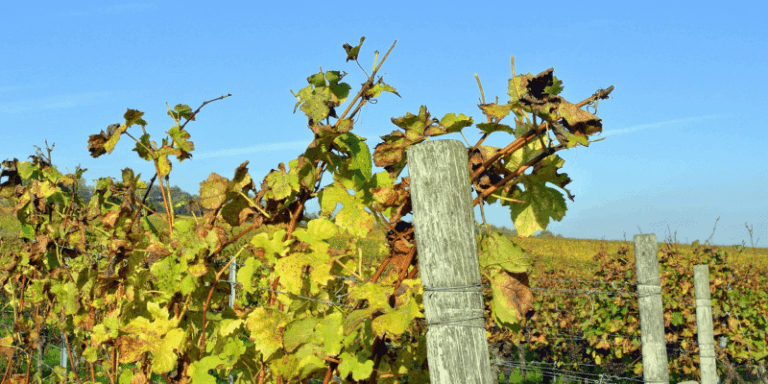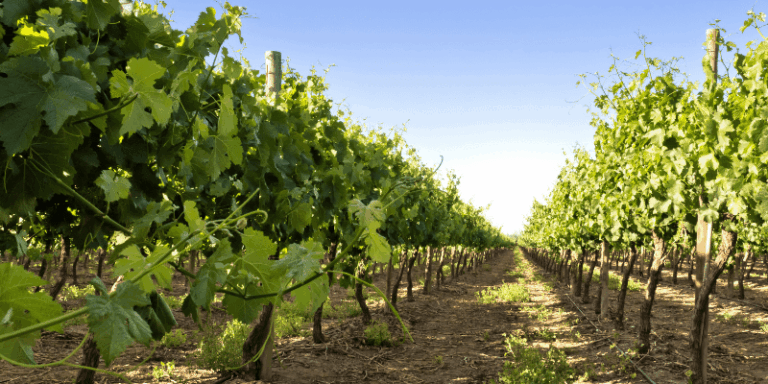
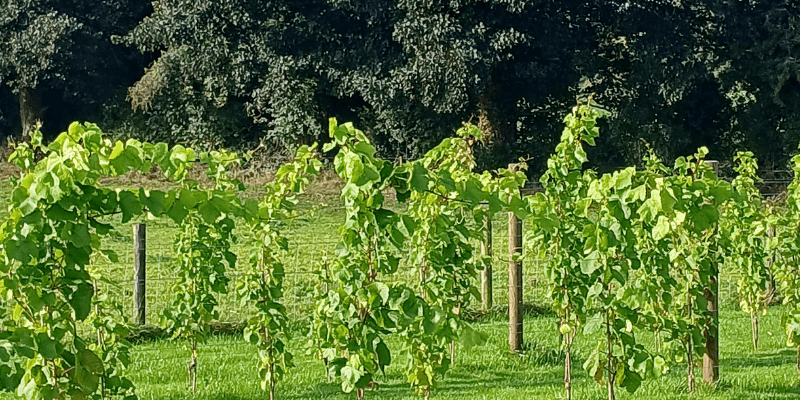
For many people, the words vineyard and Ireland still sound like an unlikely combination.
Ireland is famous for dairy farming, beef, whiskey, stout and an impressive ability to discuss the weather at considerable length. Wine grapes have traditionally belonged somewhere warmer.
But vineyards do exist in Ireland.
They remain small in number compared with established European wine regions, and Irish viticulture is still highly experimental, but growers are now cultivating grapes from County Mayo on the Atlantic coast to Wexford and Cork in the south-east and south.
Stephen Skelton MW’s EnglishWine.com Irish Vineyards directory currently lists 16 vineyards in Ireland, including Irish Wine Estates in County Offaly. EnglishWine.com is one of the most established sources of vineyard data for Britain and Ireland, and Skelton has worked in viticulture since the 1970s. Englishwine.com
View Stephen Skelton MW’s Irish Vineyards directory at EnglishWine.com
Ireland is not yet a wine region in the conventional sense. There is no single dominant growing area, no long-established Irish appellation and certainly no settled formula for which grape varieties will ultimately prove most successful.
That is precisely what makes Irish wine interesting at the moment.
Are there really vineyards in Ireland?
Yes.
According to the current EnglishWine.com directory, vineyards can be found across a surprisingly wide part of the country. Englishwine.com
The vineyards listed are:
Vineyard
Location
Casa Rizzini
Mullingar, County Westmeath
Daria’s Vineyard
Westport, County Mayo
Domaine Kavanagh Genevrier
County Wexford
Fairy Trees Winery
Dunleer, County Louth
Herovina
Fennor, Slane, County Meath
Irish Grape Vines
Dundrum, Dublin
Irish Wine Coop
Cloughjordan, County Tipperary
Irish Wine Estates
Ballyclery, Roscrea, County Offaly
Llewellyn’s Vineyard & Fruit Farm (Lusca)
Lusk, County Dublin
Owning Vineyard
Pilton, County Kilkenny
Rathmore Vineyard
Fiddown, County Kilkenny
Temerity Wine Estate
County Mayo
Thomas Walk Vineyard
Kinsale, County Cork
ValeView Wine
Nenagh, County Tipperary
Viking Irish Drinks (Dennison’s Vineyard)
Ballinaboola, County Waterford
Wellingtonbridge Vineyard
Wellingtonbridge, County Wexford
Source: Stephen Skelton MW, EnglishWine.com Irish Vineyards directory. Vineyard projects evolve, so anyone researching a particular vineyard should check current information directly before travelling. Englishwine.com
One important point is worth making: being listed as a vineyard does not mean that a property is open to visitors, offers wine tastings or even currently sells wine commercially.
Some are established wine producers. Others are experimental or developing vineyards. Some are extremely small.
That variety is a fairly accurate reflection of where Irish viticulture currently stands.
Where are Ireland’s vineyards?
There is no Irish equivalent yet of Bordeaux, Rioja or even the increasingly established vineyard concentrations of southern England.
Instead, vineyards are scattered across the country.
The current directory includes projects in:
- Dublin;
- Wexford;
- Kilkenny;
- Waterford;
- Cork;
- Tipperary;
- Offaly;
- Westmeath;
- Meath;
- Louth;
- Mayo.
That geographical spread is interesting in itself.
Some vineyards benefit from relatively sheltered eastern or south-eastern conditions. Others are testing what is possible much farther west, including vineyards in Mayo exposed to a considerably more Atlantic climate.
Irish Wine Estates sits almost in the centre of the country, at Ballyclery in South Offaly.
Our own project therefore asks a slightly different question from a coastal vineyard:
Can a sheltered inland site in the heart of Ireland provide suitable conditions for commercially useful wine grapes?
That is one of the things we are trying to discover.
You can see how we are approaching that experiment on our Our Vineyard page.
What grapes are grown in Ireland?
Perhaps the most interesting feature of Irish viticulture is the sheer variety of grapes being tried.
The EnglishWine.com listings alone include varieties such as Chardonnay, Rondo, Solaris, Seyval Blanc, Regent, Bacchus, Pinot Noir, Souvignier Gris, Johanniter, Pinotin, Cabernet Cortis and Zweigelt, among others. Englishwine.com
That diversity exists for a reason.
Ireland presents growers with a particular combination of challenges:
- a relatively cool growing season;
- high rainfall;
- humidity and fungal-disease pressure;
- variable summers;
- spring frost risk;
- limited heat accumulation compared with traditional European wine regions.
A grape variety that performs beautifully in Burgundy or Tuscany is therefore not automatically the sensible choice for Ireland.
Growers have to think about considerably more than whether they like the resulting wine.
Early-ripening grapes
One obvious consideration is ripening time.
Ireland has a relatively limited window in which grapes can develop sufficient sugar and flavour before autumn conditions deteriorate.
Varieties capable of ripening earlier therefore have an obvious attraction.
This is one reason grapes such as Rondo and Solaris feature in Irish vineyards.
At Irish Wine Estates, understanding ripening behaviour is one of the reasons we planted a small pilot vineyard at Ballystanley in 2024 before undertaking the much larger Ballyclery planting in 2026.
The pilot allows us to observe what happens rather than assuming that theoretical suitability will translate into vineyard performance.
Disease-resistant grape varieties
Disease is another major consideration.
Ireland’s combination of rainfall and humidity can create favourable conditions for fungal diseases including downy mildew, powdery mildew and botrytis.
That makes newer disease-resistant varieties particularly interesting.
These are often referred to as PIWI varieties, from the German Pilzwiderstandsfähige Rebsorten, essentially fungus-resistant grape varieties.
Modern PIWIs have been bred to combine useful wine characteristics with improved resistance to important vineyard diseases.
They potentially offer several advantages in wetter climates:
- fewer fungicide applications;
- lower tractor use;
- reduced labour;
- lower environmental impact;
- greater resilience in difficult seasons.
That does not mean every PIWI will work in Ireland.
It means they deserve testing.
At Irish Wine Estates we are deliberately trialling a broad range of established, early-ripening and disease-resistant varieties because Irish viticulture is too young for us to assume that all of the important decisions have already been made.
Traditional varieties still have a role
Experimentation with newer grapes does not mean abandoning traditional varieties.
Several Irish vineyards are also growing grapes familiar from established European wine regions.
EnglishWine.com’s current listings include Chardonnay, Pinot Noir, Sauvignon Blanc, Merlot and Cabernet Sauvignon in various Irish vineyards. Englishwine.com
Their long-term suitability will depend on site, season, vineyard management and the style of wine being attempted.
That is an important distinction.
Asking simply:
“Can Chardonnay grow in Ireland?”
is much less useful than asking:
“Can Chardonnay ripen consistently on this particular Irish site, at useful yields, with acceptable disease pressure and with fruit suitable for the intended wine style?”
Ireland and cool-climate wine
Ireland sits towards the climatic edge of conventional European viticulture.
That creates obvious difficulties, but cooler conditions are not automatically undesirable for wine.
Cooler growing regions can preserve acidity and allow slower flavour development, characteristics particularly useful for certain styles of wine.
The rapid development of the English wine industry demonstrated that commercially significant vineyards could emerge considerably farther north than many people once assumed.
Ireland is not simply England with another ferry journey attached, however.
Our rainfall, soils, wind exposure and local climates differ considerably, and successful Irish viticulture will have to develop around Irish conditions.
There is still a great deal to learn.
Is climate change making vineyards in Ireland possible?
Climate is undoubtedly part of the story, but it would be misleading to reduce modern Irish vineyards to the simplistic claim that Ireland has suddenly become warm enough to make wine.
Several things are changing simultaneously.
Grape breeding has advanced significantly.
Growers have access to earlier-ripening and more disease-resistant varieties.
Weather monitoring and disease modelling are improving.
Vineyard establishment and canopy-management knowledge from other cool-climate regions is more accessible.
And yes, climatic conditions themselves are changing.
Modern Irish viticulture therefore sits at the intersection of climate, genetics, technology and agricultural experimentation.
At Irish Wine Estates, we collect our own detailed vineyard weather information precisely because we want to understand what is actually happening at our site rather than relying on broad assumptions about the Irish climate.
How established is Irish wine?
Not very, and that is worth saying plainly.
Ireland’s vineyard sector is tiny compared with France, Italy, Spain or even England and Wales.
Many vineyards are young.
The number of commercial vintages available is limited.
There is relatively little long-term performance data.
And the industry has not yet converged on a small group of dominant grape varieties.
Rather than being a weakness, however, this makes Ireland particularly interesting from a viticultural perspective.
We are watching an industry work out some of its fundamental questions in real time.
Which sites perform best?
Which grape varieties crop reliably?
Which tolerate disease?
Which ripen consistently?
What yields are sustainable?
Which wine styles ultimately make sense?
The answers will emerge over years rather than press releases.
Lusca Vineyard and the pioneers of modern Irish wine
Any discussion of modern vineyards in Ireland should recognise those who began experimenting before the current wave of interest.
Llewellyn’s Vineyard & Fruit Farm, better known through its Lusca wines, in Lusk, County Dublin, is one of the better-known names in modern Irish wine.
Its appearance alongside much newer vineyards in the EnglishWine.com directory illustrates how the Irish sector now contains both earlier pioneers and a new generation of experimental projects. Englishwine.com
That accumulated experience matters.
Those of us establishing vineyards today benefit enormously from growers who were prepared to test Irish conditions when the idea sounded considerably more eccentric than it does now.
Irish Wine Estates in County Offaly
Irish Wine Estates is one of those newer projects.
Our story started with a pilot vineyard at Ballystanley in 2024.
That was followed by the major planting at Ballyclery in 2026, where we are developing a commercial vineyard alongside an unusually broad varietal trial.
We are not pretending to know precisely what the vineyard will look like in twenty years.
The purpose of growing a range of varieties is partly to find out.
We are recording:
- weather;
- growth stages;
- disease;
- ripening;
- grape chemistry;
- crop performance;
- differences between varieties and seasons.
Over time that should allow us to reduce the experimental range and concentrate increasingly on the grapes that actually prove themselves here.
You can follow that work in more detail on Our Vineyard.
Can you visit vineyards in Ireland?
This is where visitors need to be slightly careful.
The fact that Ireland has vineyards does not mean all of them operate public visitor attractions.
Some are private.
Some are developing.
Some may sell wine without running regular tours.
Others may welcome visitors only by prior arrangement.
Always check directly with an individual vineyard before travelling.
At Irish Wine Estates, we are taking a deliberately gradual approach.
Our Preview Vineyard Tours begin on selected dates in 2027.
These will be small-group, owner-led visits allowing people to see the vineyard while it is still developing, understand the grape trials, explore the farm and hear about what has worked, what has failed and what we are still learning.
There will be no wine tasting during the 2027 Preview season, and the vineyard will not be open for casual walk-in visitors.
Advance booking will be required.
Visit Irish Wine Estates
If you are looking specifically for a vineyard tour in Ireland, you can read about our 2027 programme and join the Preview Tour list on our Vineyard Tours in Ireland page.
Is Ireland becoming a wine region?
Perhaps the most accurate answer is that it is becoming a collection of wine-growing experiments.
That may eventually develop into something recognisable as an Irish wine region or several distinct Irish wine-growing areas.
It is much too early to declare the outcome.
There are already vineyards stretching across a surprising range of Irish landscapes. Growers are testing conventional European grapes, early-ripening hybrids and a new generation of disease-resistant varieties.
Some projects will undoubtedly work better than others.
Some varieties will disappear.
Others may prove unexpectedly well suited to Irish conditions.
And the wines themselves will ultimately determine whether Irish viticulture develops from an interesting agricultural experiment into a meaningful commercial industry.
That process will take time.
Which, conveniently, is something vineyards understand rather well.
A developing picture
This guide should also be treated as a snapshot rather than a permanently complete register.
New vineyards are being planted. Existing projects evolve, expand or occasionally disappear. Public access and commercial activity can change.
For the most current independent directory we recommend Stephen Skelton MW’s Irish vineyard data at EnglishWine.com. His site maintains vineyard information for Britain and Ireland and is an invaluable reference for anyone interested in cool-climate viticulture. Englishwine.com
EnglishWine.com – Irish Vineyards
EnglishWine.com – Stephen Skelton MW