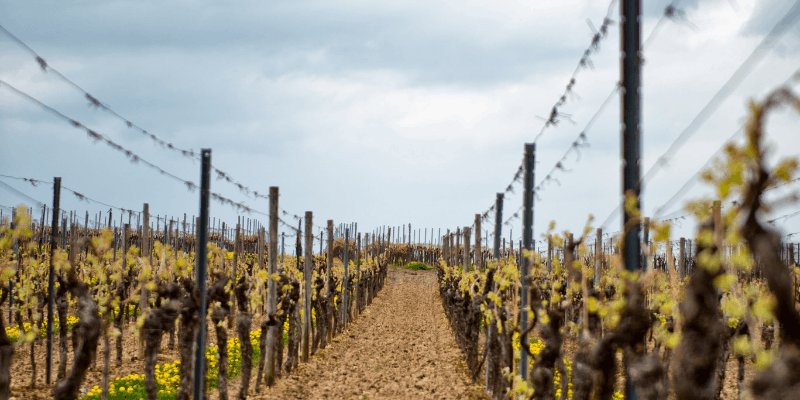
There is a tendency to think that establishing a vineyard begins when the vines go into the ground.
In reality, a great deal has to happen before that.
During the early months of 2026, as we prepared for the major planting at Irish Wine Estates in South Offaly, one issue began to dominate almost everything we were trying to do: rain.
Not one dramatic storm or a particularly wet weekend. Just persistent rainfall, week after week, leaving the ground saturated and repeatedly closing the windows in which we could work.
By spring, we had experienced roughly four months in which prolonged wet conditions had made one of our most important jobs increasingly difficult: getting the vineyard infrastructure installed before the vines arrived.
For a developing vineyard, weather does not merely influence the crop. Sometimes it determines whether you can build the vineyard at all.

When the ground is simply too wet
The problem was not necessarily that it was raining every hour of every day.
The problem was that the land rarely had enough time to dry.
A short break in the weather might give us a dry afternoon, but underneath the surface the soil could still be saturated. Bringing tractors, post drivers and other equipment onto the field in those conditions would risk compaction, rutting and unnecessary damage to the soil.
That would have been a particularly foolish way to begin the life of a vineyard we expect to be here for decades.
So there were days when the sun was out and we still could not work.
Agriculture occasionally provides the useful reminder that looking out of the kitchen window is not quite the same thing as assessing ground conditions.
Why the trellis mattered so much
Before our main Ballyclery planting could proceed efficiently, we needed the basic trellis infrastructure in place.
That meant installing:
- end posts and anchors;
- intermediate line posts;
A trellis is not decorative vineyard furniture. It becomes part of the permanent growing system.
As the vines develop, it allows us to train shoots vertically, manage the canopy, support fruit and create an organised structure in which each vine can be managed properly.
You can see more about how the vineyard has since developed on our Our Vineyard page.
In early 2026, however, all of that still had to be built.
And building it required access to the field.
A fixed delivery date meets an unpredictable spring
At the same time, the vines themselves were already being prepared by specialist nurseries in Europe.
That created an interesting conflict.
The weather had no particular interest in our timetable, while the arrival of several thousand dormant vines was rather less negotiable.
Once lifted and delivered, vines cannot simply sit indefinitely while everyone waits for conditions to improve.
They need to be stored correctly and planted within an appropriate window.
So the sequence we had originally imagined:
finish trellising → prepare everything carefully → receive vines → plant
was becoming compressed into something closer to:
watch the weather → get onto the land whenever possible → complete the essentials → keep moving.
It was not quite panic, but the amount of spare time in the programme was disappearing rapidly.
One delay affects everything else
This was probably the most useful lesson from that period.
A wet field does not create one isolated problem.
It creates a chain of them.
If machinery cannot travel:
- posts cannot be driven;
- anchors cannot be installed;
- labour has to be rescheduled;
- contractors have to be reorganised;
- subsequent jobs are pushed closer together;
- the planting window becomes tighter.
On a spreadsheet, each of those jobs occupies its own row.
On a farm, they are all connected.
One delay simply moves the pressure further down the line.
Protecting the soil rather than the schedule
It would have been possible to force some of the work.
We chose not to.
One of the easiest mistakes when a project begins slipping behind schedule is to solve today’s problem by creating tomorrow’s.
Driving heavy machinery repeatedly over saturated ground might have allowed us to put a few more posts in, but damaging the soil structure of a newly established vineyard to recover a few days on a programme would have been a poor trade.
The soil is one of the assets we are building the vineyard around.
Protecting it mattered more than making the project plan look tidy.
That meant accepting delays when conditions genuinely were not suitable and then moving very quickly when they were.
Working in weather windows
As spring progressed, the way we organised the work changed.
Instead of expecting long periods in which we could steadily complete one task after another, we began treating suitable weather as a series of windows.
When conditions allowed, we had to be ready.
That meant:
- watching short-term forecasts closely;
- monitoring what the soil was actually doing rather than simply whether it had stopped raining;
- making sure machinery and materials were available;
- prioritising the parts of the vineyard that mattered most;
- accepting that the ideal order of jobs might have to change.
It was a useful introduction to the reality of managing a vineyard in Ireland.
Planning matters enormously.
So does the ability to abandon the plan when conditions make it irrelevant.
Why collect our own weather data?
Experiences like this were also part of the reason we became increasingly interested in collecting weather information directly from the vineyard.
Regional forecasts tell us a great deal, but they cannot tell us exactly how much rain has fallen at Ballyclery, how temperatures have developed on our particular site or how quickly conditions are changing.
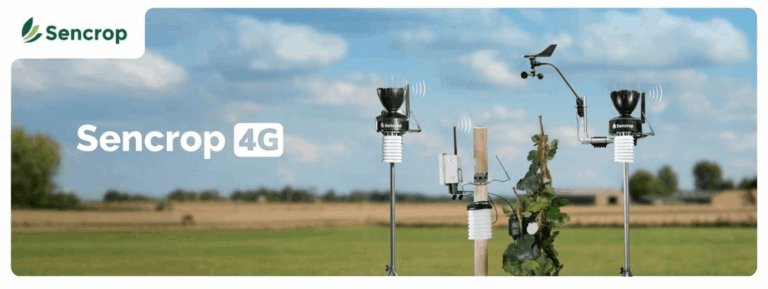
We subsequently installed our own vineyard weather station so that, over time, we can build a much more detailed picture of the conditions the vines actually experience.
That information will eventually allow us to compare rainfall, temperature and accumulated heat with vine growth, disease pressure and ripening from season to season.
Irish viticulture is still developing. Having our own evidence is considerably more useful than assuming that somebody else’s climate data will provide all the answers.
Building a vineyard rather than simply planting vines
This period also reinforced something that is easy to miss when looking at photographs of established vineyards.
The rows of vines are only the visible part.
Before them come drainage decisions, soil preparation, posts, anchors, wire, access routes, water, machinery, plant orders and countless small operational choices.
And behind all of those sits the land itself.
Our main Ballyclery vineyard began taking shape in 2026, following the smaller Ballystanley pilot vineyard planted in 2024. The pilot gave us some early experience with varieties and Irish growing conditions; Ballyclery represented the much larger step from experiment towards a developing commercial vineyard.
The wider story of those two sites and what we are learning from them is covered on Our Vineyard.
Were we going to get it done?
At the time, that was the obvious question.
We were behind where we wanted to be and the planting window was getting closer.
But farming has a useful way of discouraging excessive drama.
There was no clever solution.
We simply had to take every suitable working day we were given, complete the important jobs in the correct order and keep moving.
Eventually the weather did give us the opportunities we needed and the vineyard moved from plans and bundles of posts to rows of newly planted vines.
Looking back, the prolonged wet spring was not an unfortunate footnote to the project.
It was part of establishing it.
Why tell this part of the story?
One of the reasons we started documenting Irish Wine Estates from the beginning was that we did not want only to show the finished version.
Established vineyards can look wonderfully inevitable.
They are not.
They are built through years of decisions, experiments, weather setbacks, things that work and things that need to be reconsidered.
For us, that process is part of what will eventually make visiting Irish Wine Estates interesting.
During our 2027 Preview Vineyard Tours, visitors will be able to see a working vineyard while it is still developing and hear about some of the choices and lessons involved in establishing it in South Offaly.
The 2027 programme will be vineyard tours only, with no wine tasting, and visits will be available on selected dates by advance booking.
More information is available on our Vineyard Tours in Ireland page.
Four wet months, one useful lesson
Perhaps the biggest lesson from that spring was simply that establishing a vineyard means working with the conditions you have rather than the conditions you put into the project plan.
We could choose the vines.
We could design the trellis.
We could organise the labour and machinery.
We could not decide when the rain would stop.
The job was to recognise that constraint, protect the land and be ready when the opportunity to work appeared.
There would be plenty of other weather lessons to come.
We just did not know then that a few months later we would be worrying about almost the exact opposite problem.