Some changes on a farm happen with very little ceremony.
This was one of them.
Today our plough left the yard for the last time, loaded onto the back of the New Holland T6.180 and heading for Hennessys Auctions in Portlaoise.
There was nothing especially dramatic about it. A tractor, a plough and another journey through the gate.
But it felt like a significant moment.
We had bought the plough only the previous year, specifically because we wanted to plough our own land as we prepared the farm for what was coming next. It did exactly what we bought it to do.
And now we no longer needed it.

A tool bought for a particular job
The decision to buy the plough was a practical one.
As we began preparing the land for Irish Wine Estates, we wanted to understand the farm properly rather than simply hand every operation to a contractor.
Ploughing gave us an opportunity to see the soil across the site, understand how different areas behaved and prepare parts of the farm for the changes ahead.
For that period, owning the machine made sense.
But farms change.
The vineyard has now altered the way this land will be managed for decades rather than seasons. Vines are a permanent crop. Once the trellis is installed and the rows established, the annual cycle looks very different from the cultivation of a conventional arable field.
A plough that had been useful suddenly had very little future work here.
Keeping machinery simply because you like having it in the shed is an impressively effective way of converting money into rust.
So it was time for it to go.
Selling it back where we bought it
There was a pleasing symmetry to where the plough ended up.
We took it back to Hennessys Auctions in Portlaoise, where we had bought it the previous year.
And, unusually for agricultural machinery, we achieved the same price for it that we had originally paid.
Financially, that made the decision particularly easy.
Emotionally, it was slightly different.
Machinery has a habit of becoming associated with particular stages of a farm. You remember the fields it worked, the days that went well and occasionally the ones when everything seemed determined not to.
This plough had been part of the transition.
It arrived when much of Irish Wine Estates still existed on plans, spreadsheets and conversations.
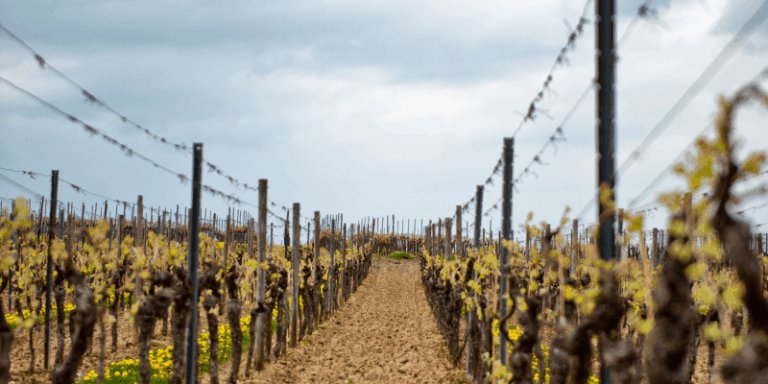
It left when rows of vineyard posts and vines were beginning to define what the farm was becoming.
The farm is changing rather than disappearing
One of the themes running through Irish Wine Estates is agricultural change.
We are not trying to recreate an imaginary version of an old Irish farm, nor are we pretending that everything traditionally done here was somehow better because it happened in the past.
Farms have always adapted.
The cottage, the Kelly shed, the Massey Ferguson 165 and the other elements of the older farm belonged to a modern working agricultural business of their time.
Irish Wine Estates is simply another stage in that process.
The economics of agriculture have changed. The scale required to compete in conventional commodity farming has changed. And on a relatively small farm, we believe there is an opportunity to create more value from the land by combining viticulture, wine, tourism and direct relationships with customers.
That wider transition is part of the story of Irish Wine Estates.
Selling the plough is a tiny event within that much larger change, but it represents it rather neatly.
Managing a permanent crop
A vineyard requires a different mindset from an annually cultivated field.
Much of the infrastructure is permanent.
The vines themselves may remain productive for decades. Posts, wires and rows establish a structure that changes relatively little from year to year.
Once that structure is in place, the focus shifts towards managing what is already there:
- vine growth;
- soil beneath and between the rows;
- water;
- nutrition;
- canopy management;
- disease pressure;
- biodiversity;
- fruit development;
- eventually, harvest.
That does not mean cultivation disappears entirely or that one farming system is inherently superior to another.
It simply means that the machinery required by this farm is changing along with the enterprise.
The plough had reached the end of its job here.
A small marker of a much bigger transition
When we began this project, a surprising amount of it involved removing, changing or repurposing things.
Fields that had previously been managed one way were being planted with vines.
Old agricultural buildings were being considered for completely different purposes.
Machinery that once made sense might no longer be needed.
At the same time, other things that could easily have been demolished or discarded began to acquire new relevance.
The old Kelly of Portlaoise shed, for example, increasingly looks like an important part of the future visitor experience precisely because it belongs so firmly to the agricultural history of the farm.
The same applies to the cottage and other surviving elements of the original holding.
So this isn’t simply a story of replacing old agriculture with something new.
It is about deciding what still has a useful role, what can be adapted and what it makes sense to let go.
Today, that answer was the plough.
Why these details will matter to visitors
When people eventually visit Irish Wine Estates, we don’t want the experience to consist simply of walking past rows of vines while someone recites facts about grapes.
The farm itself is part of the story.
Visitors will be able to see how an ordinary Irish agricultural holding is gradually being reshaped around a vineyard, why particular decisions were made and how the old and new parts of the farm fit together.
Some of those decisions are substantial, such as choosing which grape varieties to plant.
Others are as mundane as deciding that there is no longer enough work for a plough.
Together they explain how the place evolved.
Our first Preview Vineyard Tours begin on selected dates in 2027. These will be small, owner-led visits to the working vineyard and farm, available by advance booking only. There will be no wine tasting during the 2027 Preview season. At that stage, the interesting thing is the project itself and the chance to see it while it is still being built.
More information is available on our Vineyard Tours in Ireland page.
No ceremony, just another job finished
There was no grand send-off when the plough left.
James attached it to the T6.180 and drove it away.
That was probably appropriate.
It had been bought to do a job. It did the job. We recovered what we had paid for it and somebody else will now put it back to work.
But watching it leave still felt like closing a small chapter.
A year earlier, we needed a plough because we were preparing fields.
Now we need very different equipment because those fields are becoming a vineyard.
That is what change on a farm often looks like.
Not a dramatic announcement.
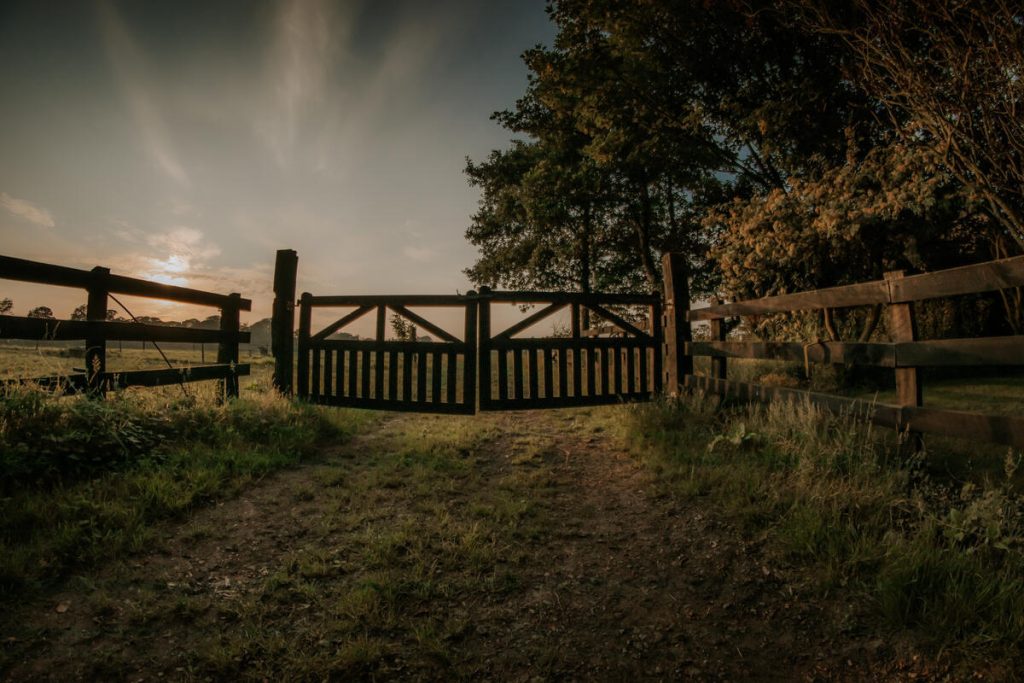
Just one familiar machine disappearing through the gate because the farm no longer needs it.
Watch the video
You can watch the video of the plough leaving Irish Wine Estates for the final time on our YouTube channel.