Ireland has a long-established reputation for whiskey, stout and increasingly for craft spirits and beer.
Wine is rather different.
Vineyards exist in Ireland, Irish-grown wines are being produced, and a new generation of growers is experimenting with grape varieties across the country. But Ireland is still at a very early stage as a wine-producing nation.
That matters if you are searching for a wine tasting in Ireland.
You should not expect the dense network of cellar doors, tasting rooms and vineyard restaurants you might find in France, Italy or Spain.
Instead, Ireland offers something much younger and, in its own way, rather more unusual: the opportunity to explore a wine culture while it is still being created.

Can you do wine tasting in Ireland?
Yes, but options remain limited and visitors should check directly with individual producers before travelling.
Some Irish vineyards and wine producers have commercial wines available. Others are small private vineyards, experimental projects or newly planted estates that are not yet producing wine at meaningful scale.
Likewise, not every vineyard that appears in a directory or on Google operates a visitor centre or offers regular tastings.
Ireland’s wine sector is simply not mature enough for that assumption yet.
Our guide to Vineyards in Ireland explains more about where Irish vineyards are located and the different stages of development across the sector.
Why Irish wine tasting is different
In established wine regions, the tasting itself can dominate the visitor experience.
You might compare several vintages, explore different vineyard parcels or spend an afternoon discussing oak regimes with someone who appears to have strong feelings about barrels.
Ireland’s current wine story is different.
For many Irish vineyards, the most interesting part is still happening outside the bottle.
Growers are working out:
- which grape varieties perform reliably;
- which sites accumulate enough heat;
- how different grapes cope with rainfall and humidity;
- how to manage fungal disease;
- what yields are realistic;
- which varieties ripen consistently;
- what styles of wine ultimately make sense.
That means an Irish vineyard visit can be as much about viticulture, farming and experimentation as about tasting finished wine.
Ireland is still learning what its wine identity might be
There is no established definition of an Irish wine style.
That would be rather ambitious for an industry with such a short modern history.
Different growers are experimenting with different grapes and different approaches.
Some traditional European varieties are being planted, alongside earlier-ripening hybrids and newer disease-resistant grapes.
The climate itself creates particular constraints.
Ireland has:
- relatively cool growing conditions;
- high rainfall;
- significant humidity;
- spring frost risk;
- potentially difficult autumn weather;
- substantial seasonal variation.
The successful Irish wines of the future will therefore emerge from what actually performs in those conditions, rather than from deciding in advance that Ireland ought to imitate Burgundy, Champagne or anywhere else.
At Irish Wine Estates, that is one reason we are trialling a broad range of grape varieties and collecting detailed information about how they behave.
You can follow that work on our Our Vineyard page.
So what might an Irish wine taste like?
It is much too early to describe a single Irish wine profile.
Site, grape variety, vintage and winemaking will all matter.
What can reasonably be said is that grapes grown in cooler conditions often retain relatively high natural acidity, which can be useful in both still and sparkling wine styles.
But that is not a guarantee of quality.
Cool conditions can preserve acidity. They can also make successful ripening harder.
Rain can sustain vines. Too much rain can increase disease pressure.
A long growing season can help flavour development. An early autumn deterioration can bring that season abruptly to an end.
Irish viticulture will be defined by managing those trade-offs successfully.
Wine tasting starts in the vineyard
This is one reason we think the vineyard itself matters so much.
A tasting makes more sense when visitors understand how difficult it was to produce the grapes in the first place.
Why was one variety planted rather than another?
Why is one row vigorous and another struggling?
Why does one grape ripen weeks ahead of another?
Why might disease resistance be particularly valuable in Ireland?
Why does slope, shelter or drainage matter?
Wine can sometimes become rather detached from agriculture once it arrives in a bottle.
We would like the experience at Irish Wine Estates eventually to reconnect the two.
The wine should make more sense because visitors have already walked through the place it came from.
Irish Wine Estates is not offering wine tastings in 2027
This is important enough to state very plainly:
Irish Wine Estates will not offer wine tasting during the 2027 Preview Vineyard Tour season.
The 2027 programme is specifically designed as a preview of the developing vineyard and farm.
Visitors will be able to:
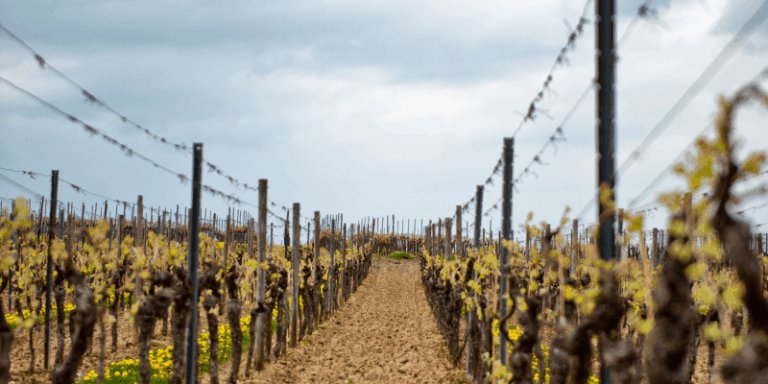
- walk through the vineyard;
- learn about the grape varieties we are growing;
- understand why we chose the site;
- see some of the experiments underway;
- hear about the successes, mistakes and lessons involved in establishing the vineyard;
- experience the farm while it is still developing.
But there will be no wine tasting.
We would rather offer a genuine vineyard experience than manufacture a tasting programme before the estate is ready for one.
Why open before we are ready to offer tastings?
Because the development stage is interesting in its own right.
Most visitors see vineyards after years of establishment.
The rows are mature.
The winery is operational.
The visitor route has been polished.
The awkward early decisions are largely invisible.
Irish Wine Estates is taking a different approach.
We have documented the project publicly from the beginning, and the 2027 Preview Tours extend that idea into the physical vineyard.
Visitors will see a place still becoming what it is intended to be.
They will see young vines, experimental varieties, developing infrastructure and a farm changing around the vineyard.
A tasting room can come later.
The chance to see this particular stage cannot.
When will Irish Wine Estates offer tastings?
We are deliberately not publishing a fixed date.
Our earlier website content included specific future years for wine releases and tastings. We have moved away from that approach.
Wine, vines and visitor infrastructure do not always respect marketing calendars.
We will introduce tastings when we have wines and an experience that we believe are genuinely worth offering.
That could involve wines made from our own vineyard, collaboration wines or other carefully chosen Irish wines as the visitor programme develops.
But we are not going to promise a date simply because a content calendar would prefer one.
Anyone interested in visiting should rely on the current information on our Vineyard Tours in Ireland page rather than older projected timelines.
What should a good wine tasting actually do?
When we eventually introduce tastings, the objective will not simply be to put several glasses on a table.
A good tasting should help explain the place.
Visitors should understand:
- where the grapes came from;
- why those varieties were selected;
- what the growing season was like;
- what decisions were made in the vineyard;
- how those decisions influenced the wine;
- what Ireland contributes to the final result.
The wine then becomes the end of a story rather than an isolated product.
That principle is likely to matter particularly in Ireland because the vineyard story itself is still unfamiliar to many visitors.
Irish wine and Irish food tourism
Wine also has the potential to fit naturally into Ireland’s much broader food and drink culture.
Ireland already attracts visitors interested in:
- farm-to-table food;
- artisan producers;
- whiskey;
- brewing;
- cheese;
- seafood;
- country houses;
- historic farms;
- local food traditions.
Vineyards can become another layer of that experience.
Not by pretending Ireland suddenly has a centuries-old wine culture, but by showing how a new agricultural enterprise is developing alongside much older traditions.
That combination of old and new is potentially far more interesting than importing the language and rituals of continental wine tourism wholesale.
Should you plan a trip to Ireland specifically for wine tasting?
Probably not yet.
Ireland’s vineyard sector is still too small and geographically dispersed to support the sort of multi-day wine itinerary possible in Tuscany, Rioja or Bordeaux.
But if you are already travelling in Ireland, a vineyard visit can be an unusual addition to a wider itinerary.
That may be especially attractive to visitors interested in agriculture, food, landscape and places that are changing.
Over time, as more vineyards mature and visitor experiences develop, dedicated Irish wine itineraries may become more realistic.
For now, it makes more sense to think of vineyards as an emerging part of Ireland’s wider tourism landscape.
What to check before visiting an Irish vineyard
Because the sector is still developing, always check directly with a vineyard before arriving.
Ask:
- Is the vineyard open to visitors?
- Is advance booking required?
- Is the visit a vineyard tour, a wine tasting or both?
- Are there set opening dates?
- Are children permitted?
- Is the vineyard suitable for people with reduced mobility?
- Is the visit outdoors?
- Does the vineyard sell its own wine?
- Is there actually a tasting included?
Those may sound obvious, but a vineyard listing is not the same thing as a visitor attraction.
Visiting Irish Wine Estates
Irish Wine Estates is in Ballyclery, South Offaly, close to Roscrea and Moneygall.
Our 2027 Preview Vineyard Tours will be small, owner-led visits offered on selected dates and by advance booking only.
The emphasis will be on the vineyard, the farm, the grape varieties and the story of establishing a commercial vineyard in the Irish Midlands.
Interested in visiting?
You can find current information and join the Preview Tour list on our dedicated Vineyard Tours in Ireland page.
For private visits and practical information, see Plan Your Visit.
Wine tasting in Ireland will evolve
The interesting thing about Irish wine today is not that the country has suddenly become an established wine region.
It hasn’t.
The interesting thing is that people are planting vineyards, producing wines, experimenting with varieties and gradually learning what Irish viticulture might become.
Wine tasting will develop alongside that.
The range of Irish-grown wines should increase.
More vineyards may eventually open to visitors.
Tourism experiences will become more sophisticated.
And, with enough time, people may stop finding the phrase Irish vineyard quite so surprising.
At Irish Wine Estates, we are happy for that process to take its time.
For now, the vines are the story.
The glasses can wait.