Ireland is not the first country most travellers associate with vineyard tours.
Whiskey distilleries, breweries and food experiences are firmly established parts of Irish tourism. Vineyards are rather newer.
But wine grapes are now being grown in a surprising number of places around the country, from Mayo in the west to Wexford, Waterford and Cork in the south-east and south, with vineyards also established in Dublin, Meath, Louth, Westmeath, Kilkenny, Tipperary and Offaly.
That does not yet make Ireland a mature wine-tourism destination.
It does make it an interesting one.
For visitors interested in agriculture, food, wine and places that are still evolving, Ireland’s emerging vineyard scene offers the unusual opportunity to see a wine region near the beginning of its development rather than after several centuries of refinement.

Are there wine tours in Ireland?
Yes, but the phrase needs a little explanation.
Ireland has a growing number of vineyards, but they vary enormously in size, maturity and purpose. Some produce commercial wine. Others are experimental or developing vineyards. Some welcome visitors by arrangement, while others are private working sites with no tourism operation.
So someone searching for wine tours in Ireland should not assume they will find the same type of visitor infrastructure that exists in Bordeaux, Tuscany or Champagne.
There are no great concentrations of dozens of wineries along established wine routes.
There are relatively few tasting rooms.
And many Irish vineyards are still working out which grapes, growing methods and wine styles make most sense in this climate.
In some ways, that is precisely what makes them interesting.
Our separate guide to Vineyards in Ireland looks more broadly at where Irish vineyards are located and the varieties being grown.
What does an Irish vineyard visit look like?
There is no standard Irish vineyard-tour format yet.
At a mature European estate, a visit might follow a familiar sequence: vineyard, winery, cellar and tasting.
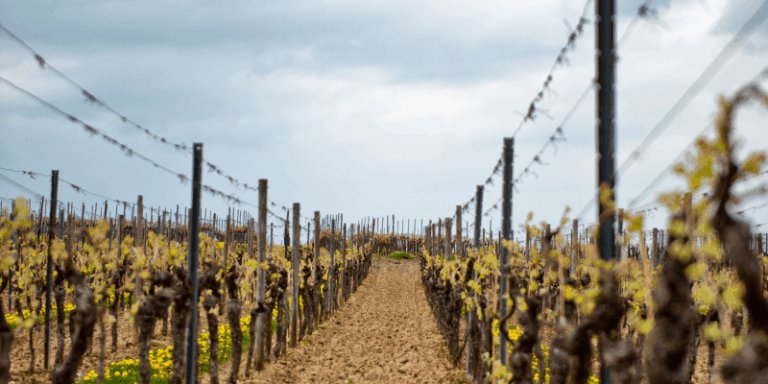
In Ireland, the experience may be much more focused on the vineyard itself.
Visitors may hear about:
- why the site was chosen;
- which grape varieties are being tested;
- how vines cope with Ireland’s rainfall and humidity;
- frost, disease and ripening;
- the realities of establishing a vineyard in an unexpected climate;
- how the farm or property has evolved around viticulture.
For anyone genuinely interested in how wine begins rather than simply how it tastes, that can be a strength.
Irish viticulture is still full of unanswered questions.
A vineyard visit here can therefore be as much about experimentation, farming and adaptation as finished bottles.
Why vineyards are appearing in Ireland
The growth of Irish vineyards is not the result of one simple change.
Climate is part of the story, but so are developments in grape breeding, better understanding of cool-climate viticulture, improved vineyard technology and the availability of earlier-ripening and more disease-resistant varieties.
Modern growers can select from grapes that would not have featured in the traditional vineyard vocabulary of several decades ago.
They can monitor weather locally, model disease risk more accurately and learn from the rapid expansion of vineyards in other cool-climate regions.
That does not make growing grapes in Ireland easy.
Rainfall, humidity, autumn weather, frost and limited heat accumulation remain serious considerations.
It means only that the range of viable possibilities is wider than it once was.
Wine tourism without pretending Ireland is Bordeaux
There is a temptation when discussing wine tourism to borrow the language of established wine regions.
That would be a mistake.
Ireland does not need to pretend it has ancient vineyard traditions, vast cellars or generations of château owners peering thoughtfully across the same vines their great-grandparents planted.
Its story is different.
Many Irish vineyards are connected to broader stories of:
agricultural diversification, climate adaptation, experimentation, food production and the search for higher-value uses of relatively small areas of land.
That makes vineyard tourism potentially complementary to Ireland’s existing strengths rather than an imitation of continental Europe.
A visitor may be interested not only in grape varieties and wine, but in the farm, landscape, local food, biodiversity and the people trying to make the project work.
For Irish Wine Estates, that broader context is central to what we are building.
A vineyard in the middle of Ireland
Irish Wine Estates is based at Ballyclery in South Offaly, close to Roscrea and Moneygall.
Our vineyard developed from an agricultural diversification idea.
The farm is relatively small by the standards of modern commodity agriculture. Rather than trying to compete through scale, the objective is to create more value from the land through viticulture, eventual wine production, tourism and direct relationships with customers.
We began with a small pilot vineyard at Ballystanley in 2024.
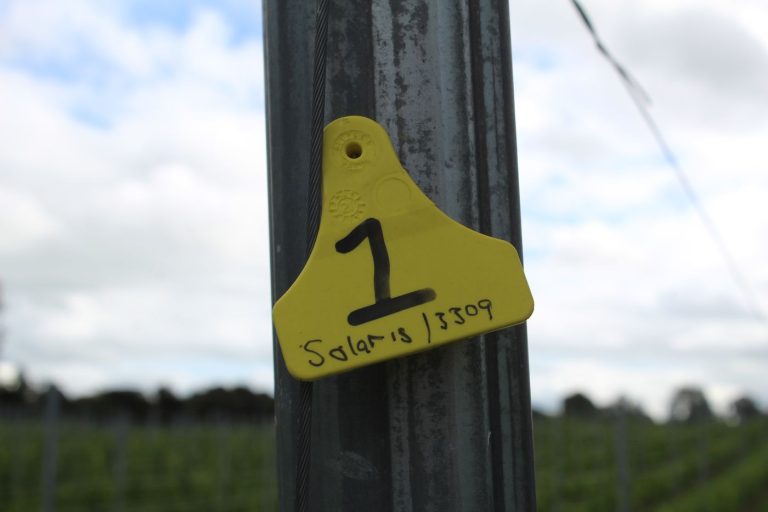
The main Ballyclery vineyard followed in 2026, with a much larger planting and an extensive experimental programme involving traditional, early-ripening and disease-resistant grape varieties.
You can read more about the vineyard and the varieties we are testing on Our Vineyard.
Why visit a vineyard that is not finished?
That is probably the question at the heart of our own tourism strategy.
Many visitor attractions wait until everything is polished before opening the gates.
We think there is something interesting about doing almost the opposite.
Irish Wine Estates is still being built.
The vineyard is young.
We are still learning which varieties perform best.
Parts of the farm are being restored and repurposed.
The visitor experience itself will develop gradually.
Rather than hide that fact, we want it to form part of the experience.
A visitor in the early years will see a very different Irish Wine Estates from someone arriving a decade later.
That is not an inconvenience to disguise. It is part of the story.
What visitors can learn from an Irish vineyard
A vineyard tour need not be a long lecture about wine chemistry.
For us, the more interesting questions are often quite simple.
Why plant vines in Offaly?
How do you decide which grapes might ripen in Ireland?
What happens when it rains for four months and then barely rains for six weeks?
Why are some varieties much healthier than others even though they are growing only a few metres apart?
How do you establish thousands of vines on what was previously an ordinary Irish farm?
What does a vineyard look like before there is much wine to talk about?
Those questions connect viticulture to farming, weather, landscape and business.
They are also the sort of things we have been documenting publicly since the project began.
Do vineyard tours in Ireland include wine tasting?
Not necessarily.
This is another area where visitors should check rather than assume.
Some established wine producers may offer tastings or wine-related events, but many Irish vineyards are small, private or still developing.
At Irish Wine Estates, our 2027 Preview Vineyard Tours will not include wine tasting.
The reason is straightforward: the purpose of the Preview season is to allow visitors to see the developing vineyard and farm, not to manufacture a tasting experience before our own wines and visitor operations are ready.
The tour will therefore focus on the vineyard, the grape varieties, the farm story and what we have learned so far.
Tasting can wait until there is something worthwhile and authentic to taste.
Planning a vineyard visit in Ireland
Because Ireland’s vineyard-tourism sector is still small, advance planning matters.
Do not assume a vineyard is open simply because it appears on a map or vineyard directory.
Check directly whether visitors are accepted, whether advance booking is required and what the visit actually includes.
That is particularly important with small owner-operated vineyards, where vineyard work rather inconveniently continues even when somebody would like to arrive at 2.30 on a Tuesday.
For travellers using a private guide or chauffeur, smaller vineyards can sometimes be especially interesting because a visit may be incorporated into a bespoke itinerary rather than a conventional coach-tour schedule.
Irish Wine Estates is deliberately developing around small groups rather than mass tourism.
Combining vineyard visits with a wider Irish itinerary
Ireland’s vineyards are geographically dispersed rather than concentrated in one wine region.
For tourism, that can actually be useful.
A vineyard visit can sit within a broader trip rather than requiring the traveller to dedicate several days to a wine region.
Depending on location, vineyard visits can be combined with historic towns, country houses, gardens, food producers, restaurants, walking, heritage attractions or simply the surrounding countryside.
That is particularly relevant to international visitors who are unlikely to come to Ireland solely to visit vineyards.
Wine tourism here will probably develop as one distinctive layer of a wider Irish trip, rather than as a separate tourism ecosystem.
Irish Wine Estates and the 2027 Preview Vineyard Tours
At Irish Wine Estates, our first small-group Preview Vineyard Tours begin on selected dates in 2027.
They are deliberately previews.
Visitors will be able to walk through the developing vineyard, learn about the grape varieties we are testing, see how the farm is changing and hear directly from us about what has gone well, what has not and what we are still trying to understand.
The 2027 programme will be:
- small-group and owner-led;
- available only on selected dates;
- advance booking only;
- vineyard tours rather than wine tastings;
- based in a genuine outdoor working vineyard.
We will not be open for casual drop-in visitors.
Looking for a vineyard tour in Ireland?
For current information about visiting us, private visits and the 2027 Preview programme, go to our dedicated Vineyard Tours in Ireland page.
That is also where you can join the Preview Tour list to hear when dates are released.
Private vineyard visits
There is also a separate opportunity for travellers touring Ireland with a private guide or chauffeur.
Bespoke itineraries do not always run precisely to schedule, particularly when somebody discovers an unexpected castle, lunch lasts longer than anticipated or Irish traffic decides to contribute to the experience.
For that reason, Irish Wine Estates plans to accommodate a limited number of private small-group visits using an approximate arrival window, with final timing confirmed closer to arrival.
More information is available through our Plan Your Visit page.
What happens next for wine tourism in Ireland?
Nobody really knows yet.
And that is a more useful answer than declaring Ireland the next great European wine destination because a few vines survived the winter.
The country’s vineyard sector is still very small.
Some projects will expand.
Others may remain tiny.
Different grape varieties and wine styles will prove more or less successful as experience accumulates.
Tourism will develop alongside that process.
What Ireland does have is a strong tradition of hospitality, food, farming and storytelling, combined with a landscape visitors already travel considerable distances to experience.
Vineyards can become another part of that story.
Not as a substitute for what Ireland already does well, but as something genuinely new growing alongside it.
Seeing an emerging wine region while it is still emerging
The mature wine regions of Europe are fascinating partly because of their history.
Ireland offers almost the opposite experience.
Its modern vineyard story is being written now.
Rows are still being planted.
Growers are still comparing varieties.
Sites are still proving themselves.
Wine styles are still evolving.
And visitor experiences are being created at the same time.
For travellers who like seeing how places change rather than simply consuming the finished version, that may eventually become one of the most interesting reasons to take a wine tour in Ireland.